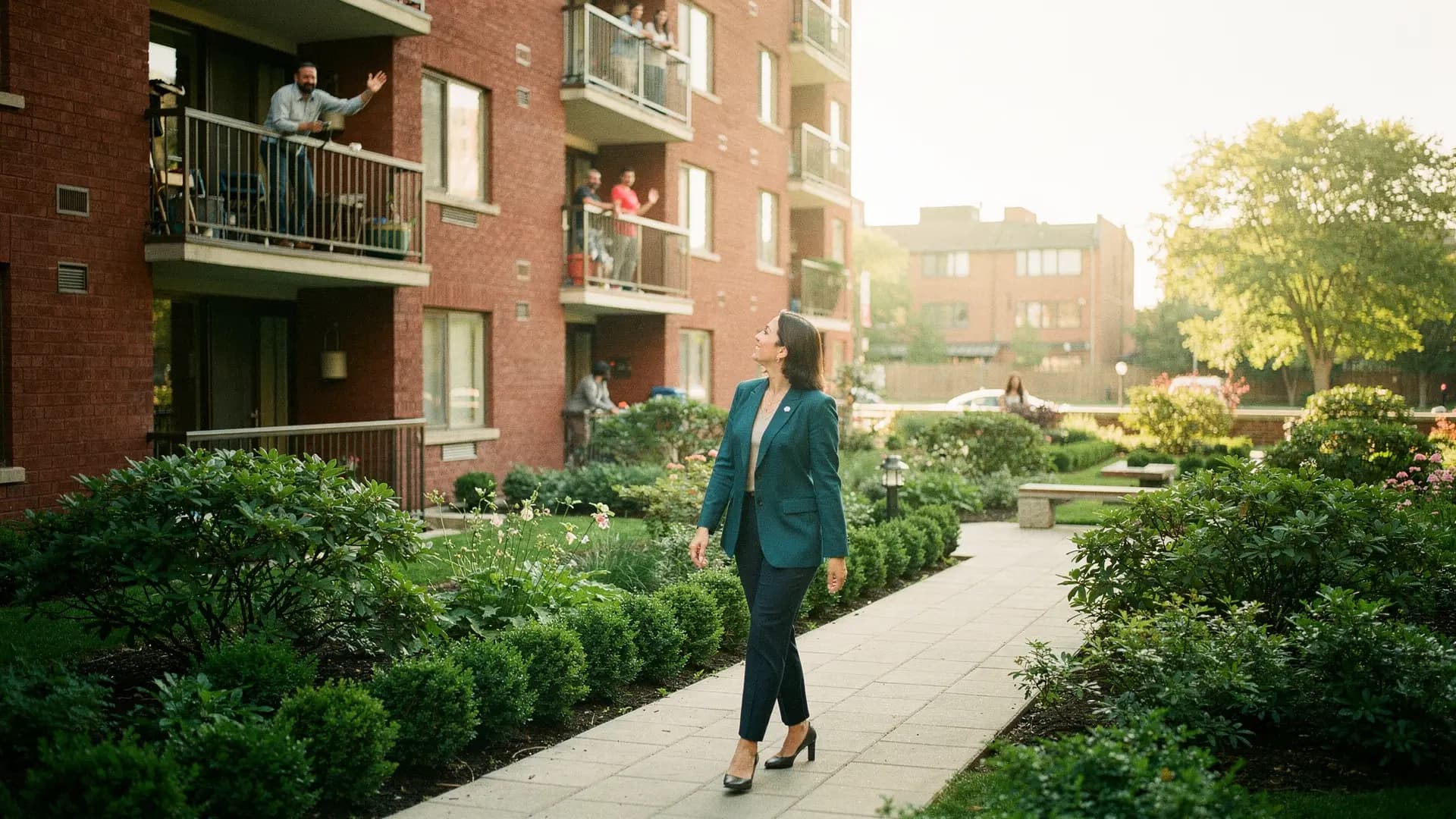
Apps and automation for property management
Every door you manage generates typing. It compounds.
We build systems that triage maintenance requests at 2am, keep tenants informed without a phone tree, chase rent politely and consistently, surface lease renewals months out, and put owner statements together without a spreadsheet weekend. People make the calls; the system does the paperwork.
Fictional HVAC example showing the same human-review approach.
Maintenance triage
Leak flagged urgent ✓
Vendor matched, waiting for your OK
We build systems that triage maintenance requests at 2am, keep tenants informed without a phone tree, chase rent politely and consistently, surface lease renewals months out, and put owner statements together without a spreadsheet weekend. People make the calls; the system does the paperwork.
Why property management
The work scales with doors. The team does not.
Property management is a volume business run on thin margins. Every unit under management produces a steady stream of small operational events: a maintenance request, a rent payment that did not land, a lease approaching its end, a prospective tenant asking about a listing, an owner wondering what happened to their net deposit this month. Each event is small. Multiplied across a few hundred doors, they are the whole workweek.
The industry's answer has been portals, and portals help. But the work between the portals is still manual: reading the maintenance request to decide if it is an emergency, matching the vendor to the job, following up on arrears in the right tone on the right day, assembling the owner package, coordinating a turnover so the unit is not vacant a week longer than it needs to be. That connective tissue is where property management companies quietly drown.
We build custom apps and automation for property management companies in Canada: residential portfolios, condo corporations, and small commercial. Our systems plug into the accounting and management software you already run and take over the typing, triage, and chasing between systems. We take no money from any software vendor, so we have no interest in moving you off tools that work.
And because landlord and tenant relations in Canada are governed work, with the RTA and the Landlord and Tenant Board in Ontario and equivalent regimes elsewhere, our builds treat formal notices and legal steps as human work that software prepares for, never performs.
Where the hours go
Six operational loads that grow with every door.
Property managers rarely lack systems. They lack hands for the work between the systems. That gap is exactly what we build for.
- 01
Maintenance triage at all hours
A leak at 11pm and a squeaky door at 11pm arrive the same way and demand the same read. Someone decides urgency, picks the vendor, informs the tenant, and follows the job to completion. The deciding takes seconds; the coordinating eats hours. - 02
Rent follow-up that must be consistent
Arrears follow-up has to be prompt, polite, documented, and the same for everyone. Done by hand, it is late on busy weeks and awkward always. Done inconsistently, it creates fairness problems you hear about later. - 03
Lease renewals that sneak up
A renewal missed by sixty days becomes a scramble; a renewal missed entirely becomes a vacancy. Tracking hundreds of lease end dates, notice windows, and rent guideline rules in a spreadsheet is how it gets missed. - 04
Leasing inquiries after hours
Prospects message about listings in the evening and expect showing times, requirements, and application steps. By morning they have applied somewhere else. Vacancy days are the most expensive line item nobody budgets. - 05
Owner reporting weekends
Owners deserve a clear monthly story: collected, spent, flagged, and why. Assembling statements and narratives from the accounting system for every owner is a recurring weekend of copy-paste for someone senior. - 06
Turnover coordination
Move-out inspection, cleaning, repairs, photos, listing, showings, screening, move-in. Eight handoffs where a dropped one costs a week of rent. Most companies run it from memory and text messages.
Between the systems
The connective tissue, handled.
Triage, vendor matching, arrears follow-up, owner packages and turnovers: the work between the portals, prepared by software and checked by your team.
See the systems we buildWhat we build
Seven systems we build for property managers.
Concrete examples across residential and condo operations. Most clients start with maintenance or rent follow-up, because those pay back immediately. Formal notices always remain human work.
- 01
Maintenance intake and triage
Requests from any channel land in one queue, get classified by urgency and trade, and emergencies page a human immediately. Routine jobs are drafted to your preferred vendor with the tenant kept informed at each step, and nothing closes until the tenant confirms it is fixed.
- Before
- An inbox, a phone, and whoever is on call deciding everything.
- After
- One triaged queue, emergencies escalated in minutes, tenants informed automatically.
- 02
Tenant communication desk
Common questions, such as payment methods, parking, amenity bookings, and move-in logistics, get instant, accurate answers from your own policies, with anything sensitive or unusual routed to your staff with a drafted reply.
- Before
- Staff answering the same twenty questions on repeat.
- After
- Instant answers to the routine, human attention on the real issues.
- 03
Rent follow-up and arrears tracking
Missed payments trigger a consistent, respectful follow-up sequence in your voice, logged per tenancy, with a live arrears board so your team sees exactly who is where in the process. Escalation to formal steps is a human decision the system tees up with a complete file.
- Before
- Follow-up when someone has time, in whatever tone the day allows.
- After
- Prompt, even-handed, documented follow-up on every missed payment.
- 04
Lease renewal pipeline
Every tenancy sits on a rolling timeline with notice windows and guideline rules for your province built in. Renewal offers are drafted months ahead for your review, and nothing reaches its date unnoticed.
- Before
- A spreadsheet of lease end dates and a hope that someone checks it.
- After
- A pipeline where every renewal decision happens on time, on purpose.
- 05
Leasing inquiry and showing flow
Listing inquiries get instant responses with the unit's real details, prequalifying questions, and bookable showing slots. Applications arrive complete, and your team starts screening from an organized file instead of an email chain.
- Before
- Evening inquiries answered the next day; applications trickling in by email.
- After
- Inquiries answered in minutes and showings booked while interest is hot.
- 06
Owner statements and reporting
Monthly owner packages are assembled from your accounting data with a plain-language narrative of what happened and why, queued for your review before sending. Owners stop calling to ask what a line item means.
- Before
- A senior person's weekend, every month end.
- After
- Drafted statements with narratives, reviewed and sent in an afternoon.
- 07
Turnover board
From notice to move-in, every unit turnover runs on one board: inspection, trades, cleaning, photos, listing, screening, and keys, with owners updated automatically and delays flagged the day they happen, not at month end.
- Before
- Turnovers run from memory, texts, and goodwill.
- After
- Every handoff tracked, every delay visible, fewer vacant days.
Governed work, respected
Software prepares. People serve notices.
Residential tenancies in Canada are governed work. In Ontario that means the Residential Tenancies Act, the Landlord and Tenant Board, prescribed forms, and strict notice rules; other provinces have their own regimes with the same seriousness. A wrongly served notice does not just fail; it can reset a process by months.
Our builds respect that line absolutely. The system tracks dates, assembles complete files, and reminds the right person at the right time. Formal notices, filings, and anything with legal effect are prepared and served by your staff or your paralegal, on the prescribed forms, with the system keeping the record. Tenant personal information is handled under PIPEDA, stays in accounts you control, and is never used to train anyone's models.
- Formal notices and LTB filings are human work; the system only prepares and reminds
- Emergency maintenance always escalates to a person, immediately
- Arrears follow-up is even-handed by design and fully logged per tenancy
- Tenant and owner data stays in your accounts, under your control
- Every automated message and action is logged for your records
- Maintenance triage and vendor dispatchApproved
- Routine tenant answers from your policiesApproved
- Rent reminders and follow-up draftsApproved
- Renewal offers and owner statementsReview required
- Arrears escalation decisionsReview required
- Formal notices and prescribed formsRestricted
- LTB filings and legal stepsRestricted
- Entering units or tenancy decisionsRestricted
Pricing
The same simple pricing as everything we build.
Property management builds price by workflow, not by door count. A maintenance triage or rent follow-up system for a few hundred doors typically lands mid-tier; a full operations layer with owner reporting and turnover boards lands higher.
- 01 · The Plan
$750 flat
A working session on your operation, a scoped roadmap, and a real price for the build. Credited in full toward your build if you go ahead.
- 02 · The Build
from $1,800
- Smart website~$1,800
- App or automation~$6,500
- Platformfrom $15,000
Typical landing points, not quotes. You get a fixed price before we start.
- 03 · Run
from $350 / month
Optional. We host, monitor, and keep improving the system. Cancel any time; you own the code either way.
Tell us your door count, your software, and the operational load that hurts most. You will get a real, fixed price in Canadian dollars within one business day.
Get my priceQuestions
Property management questions, answered plainly.
We already use property management software. Why would we need this?
Keep it; we build around it. Your management and accounting software is the system of record. What it does not do is read a 2am maintenance email and decide it is an emergency, chase arrears in your voice, or write the owner narrative. That connective work between your systems is what our builds take over, with data flowing back into the tools you already trust.
Can software really tell a burst pipe from a dripping tap?
It classifies, and it is honest about confidence. Clear emergencies, such as flooding, no heat in winter, or a security failure, page a human immediately. Ambiguous requests get a clarifying question or escalate by default. The design principle is simple: the cost of over-escalating is a phone call; the cost of under-escalating is a ceiling. We build for the ceiling.
Will it serve N4s or other notices automatically?
Never. Notices under the RTA are prescribed forms with strict service rules, and getting them wrong resets months. The system tracks the dates, assembles the complete arrears file, and reminds your team when a decision point arrives. A person decides, prepares the form, and serves it. The system then keeps the record of what happened and when.
How do tenants react to automated communication?
Well, when it is done honestly. Tenants care about speed and clarity: an instant acknowledgment that the leak report was received, a real update when the plumber is booked, an accurate answer about visitor parking at 9pm. Messages are written in your voice, sensitive matters route to staff, and nobody pretends the system is a person.
We manage condos, not rentals. Does this still apply?
Yes, with the vocabulary changed. Condo management runs on the same loads: owner requests instead of tenant requests, status certificates instead of leases, board packages instead of owner statements. The maintenance triage, communication desk, and reporting builds carry over directly, tuned to condominium legislation in your province.
What about tenant privacy?
Tenant personal information is handled under PIPEDA and stays in accounts you control. Our builds use the minimum data a workflow needs, keep payment and financial details out of drafting tools, and log access. We take no money from any software vendor, and your data is never used to train anyone's models.
We run 150 doors with three people. Is this for companies our size?
That size is the sweet spot. At 150 doors the operational load is real but hiring a fourth person is a big step. A first build focused on maintenance triage and rent follow-up typically lands in the middle of our build range, quoted as a fixed price in Canadian dollars before we start, and it works nights and weekends without overtime.
How long until something is actually running?
First workflows go live in weeks. We start with one queue, run it alongside your current process until your team trusts it, then expand. The turnover board and owner reporting layers come after the daily-grind systems have proven themselves.
We also build for adjacent operations

Your next step
Tell us your door count and your worst queue.
Maintenance, arrears, renewals, or reporting. You get a real, fixed price within one business day, and a system that scales with doors so your team does not have to.
A real, fixed price within one business day. Based in Ontario, Canada.